
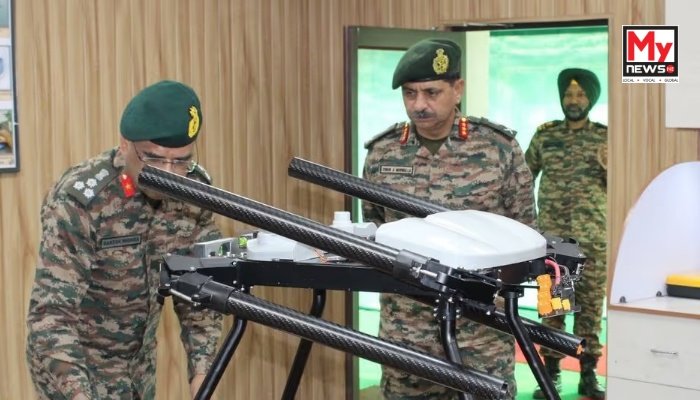

Gangtok: In a display of cutting-edge military innovation, the Indian Army has successfully validated its Manned-Unmanned Teaming (MUM-T) capabilities at the tactical level. This significant achievement unfolded during the ongoing Exercise Sarvshakti (Ex Sarvshakti), which is being conducted under the operational command of the Eastern Command’s Trishakti Corps.
The core of the exercise lies in showcasing the seamless integration of frontline soldiers with advanced unmanned systems. This collaborative approach highlights the potential for enhanced battlefield effectiveness through the synergistic operation of human personnel and sophisticated drone technology.
The MUM-T concept underscores the strategic advantage of merging the inherent strengths of ground troops with the aerial reconnaissance and precision capabilities of unmanned aerial systems. This fusion aims to significantly improve situational awareness, target accuracy, and overall coordination in dynamic combat scenarios, marking a pivotal advancement in the practical application of next-generation military technology.
According to military officials, the successful validation of MUM-T during Ex Sarvshakti serves as a powerful testament to the Indian forces’ growing readiness to operate effectively within complex, multi-domain battle environments. These modern battlefields are characterized by the convergence of land, air, and cyber warfare domains. This demonstration aligns with the nation’s broader strategic objective of achieving future-readiness and maintaining a mission-focused approach as India progresses through a transformative decade in its defence preparedness.
An official statement released during the exercise emphasized the unified objective driving this human-machine collaboration, stating, “Team Human and Team Machine have come together with one mission — success.” The practical demonstration of MUM-T capabilities not only offers a distinct tactical advantage in operational scenarios but also plays a crucial role in mitigating risks to human lives, particularly in high-threat zones.
Exercise Sarvshakti has fostered extensive inter-service cooperation, witnessing close coordination among various branches of the Indian defence apparatus, including the Indian Air Force, Indian Navy, and the Headquarters Integrated Defence Staff (IDS). The exercise has also garnered crucial support from state and central agencies, such as the Governments of Sikkim and West Bengal, the Governors of Sikkim and West Bengal, and regional defence public relations offices including PRO Defence Guwahati and PIB Gangtok.
Designed to simulate realistic battlefield conditions prevalent in the Eastern sector, particularly considering the challenging terrain and strategic importance of regions like Sikkim and North Bengal, Ex Sarvshakti involved troops conducting integrated drills. These drills featured drones undertaking critical tasks such as comprehensive surveillance, precise target marking, and detailed battlefield mapping. Simultaneously, ground forces executed coordinated movements based on the real-time intelligence and data streams provided by the unmanned systems.
Read More: Sikkim: Gitang Karmatar Embraces Digital Future with Newly Installed WiFi Network