
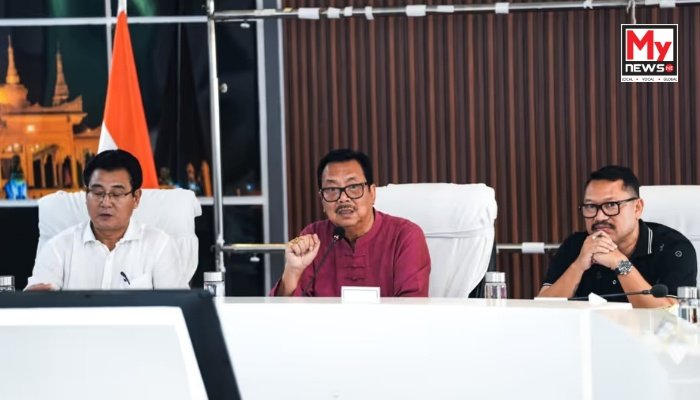

Namsai, Arunachal Pradesh: In a landmark decision aimed at preserving cultural heritage, the Tai Khamti language will soon be integrated as a third language across all government and private schools, as well as Buddhist monasteries (Buddha Viharas), in Arunachal Pradesh’s Namsai district. This significant move was finalised during a comprehensive development meeting held at the mini Secretariat on July 4.
The meeting, chaired by Deputy Chief Minister Chowna Mein, focused on crucial aspects of the district’s progress, including cultural preservation and ecological sustainability. A key outcome from the discussions, held at the Deputy Commissioner’s Conference Hall, was the concrete action plan for introducing Tai Khamti.
Starting August 16, the language will be taught from primary to secondary levels. Emphasising the urgency, Mein remarked, “The loss of a language often leads to the erosion of rituals, traditions, and cultural identity, making its preservation a top priority.” He further directed the Deputy Commissioner to ensure the policy’s seamless implementation across all private educational institutions.
The Tai Khamti Heritage & Literary Society (TKHLS) has been entrusted with the vital task of printing primers for the primary level and providing necessary training to teachers in the local language, ensuring a robust rollout of the initiative.
Beyond linguistic preservation, the meeting also saw resolutions on environmental and social fronts. ‘Nadi Utsav’ will be observed on July 8, an event dedicated to releasing fish fingerlings into rivers and streams to replenish freshwater fish populations and restore ecological balance. Additionally, the ‘Ek Ped Maa Ke Naam’ campaign is set to launch across government institutions, residences, public spaces, villages, and roadways, promoting widespread tree plantation and environmental awareness.
To bolster cleanliness efforts, one village in each constituency will be adopted as a model under the ‘Cleanliest Village’ initiative, encouraging best practices in sanitation, waste management, and community hygiene. Addressing the escalating drug menace, the administration plans to enforce stringent preventive and corrective measures, working closely with Community-Based Organisations (CBOs). Flying squads will also be deployed to curb illegal hunting and fishing, particularly during night hours, to enhance wildlife protection and biodiversity conservation.
Lastly, the meeting reviewed the ongoing Borbeel Lake Restoration Project, with renewed emphasis placed on its timely execution and long-term sustainability, underscoring the district’s holistic approach to development.
Read More: Mizoram: Anger Erupts in Champhai Over Bail for Murder Accused