

Gangtok – In a significant move to safeguard its vulnerable Himalayan landscape, the Sikkim government has constituted a 13-member high-level Commission on Glacial Hazards. This decisive action follows the catastrophic glacial lake outburst flood (GLOF) that ravaged the state on October 4, 2023, causing widespread devastation, loss of life, and significant infrastructural damage from the sudden breach of the South Lhonak Lake.
The newly formed Commission is under the expert guidance of Dr. Akhilesh Gupta, former senior advisor to the Department of Science and Technology, Government of India. Its diverse membership brings together leading minds in glaciology, climate science, and disaster risk management, alongside senior officials from both central and state governments. Key agencies such as the National Disaster Management Authority (NDMA), the State Disaster Response Force (SDRF), the State Forest Department, and the Swiss Development Corporation (SDC) are also integral to the team.
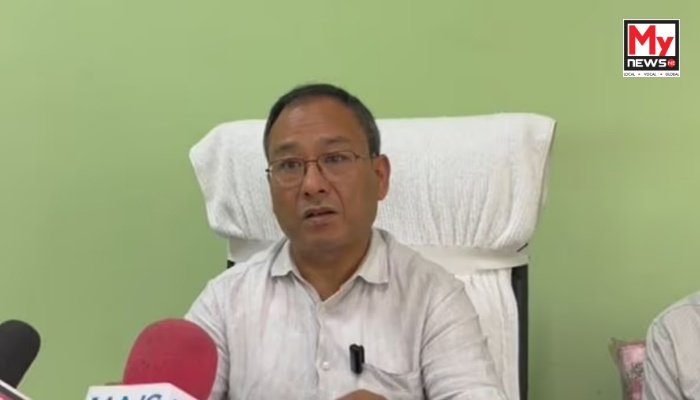
A paramount focus for the Commission is the development of a robust safety system for the perilous Korong-Kanchendzonga glacial lake complex. This interconnected chain of glacial lakes presents a formidable threat, as even a single breach could trigger a cascading disaster. Dhiren G. Shrestha, Principal Director of the Department of Science and Technology in Sikkim, underscored that the proposed system is specifically engineered to prevent such a chain reaction, ensuring that the impact of one lake bursting does not propagate downstream to other lakes and rivers.
Acknowledging the delicate ecosystem of the Himalayan region, Shrestha emphasised a departure from heavy machinery and large dam constructions, which could inflict further harm. Instead, the Commission is championing smaller, eco-friendly alternatives. These innovative solutions include solar-powered water pumps, precision pipelines for water level management, and advanced early warning systems designed to alert communities well in advance of potential floods. Such high-altitude compatible technologies are prioritised for their minimal environmental footprint.
The Commission’s members have already undertaken on-ground assessments, visiting the flood-affected areas of Rangpo and Singtam. Engaging directly with local residents, village heads, and former councillors provided invaluable insights into community needs and the practical viability of proposed solutions. A crucial meeting on June 21 saw a convergence of scientists, state officials, and officers from the Indian Army and ITBP, facilitating the exchange of observations and suggestions.
The Commission is slated to present its comprehensive final report by December 2025. This report is anticipated to serve as a definitive roadmap for managing and mitigating glacial risks across Sikkim. It will incorporate learnings from similar global disasters, propose relevant policy adoptions for the state’s preparedness, and delineate clear responsibilities for various departments. Furthermore, it will outline strategies for resource mobilisation, with funding proposals already underway, backed by the Ministry of Jal Shakti and institutions like the Indian Institutes of Technology (IITs).
Parallel to the Commission’s efforts, the Department of Science and Technology is collaborating with SDC, NDMA, and other organisations to expedite the implementation of early warning systems and long-term planning initiatives. During a briefing on June 21, Chief Minister Prem Singh Tamang (Golay) was apprised of the Commission’s progress and extended the state government’s full assurance of support for the recommendations and their prompt implementation.
Shrestha stressed the critical importance of integrating local knowledge and ensuring community participation in the planning and execution of these projects. “We need solutions that make sense for the people living here,” he reiterated, adding, “Good planning is only the first step. To make these ideas work, we also need proper funding and strong teamwork between all departments.”
Read More: Sikkim: Gangtok Police Crack Down on Night-Time Violations